Genetic diversity at COP17
Seventeenth meeting of the Conference of the Parties to the Convention on Biological Diversity (CBD COP 17)
How can countries report on genetic diversity to accomplish Target 4 of the Kunming-Montreal Global Biodiversity Framework (KMGBF)? Scroll down to learn more about genetic diversity at CBD negotiations in Armenia.

Target 4 of the KMGBF calls on CBD Parties to:
“...maintain and restore genetic diversity within and between populations of native wild and domesticated species.”
Why do we need to maintain genetic diversity?
Genetic diversity plays a crucial role in maintaining healthy ecosystems, ensuring food security, and supporting society as a whole. Without genetic diversity, ecosystems can’t adapt to change, which can have widespread effects on agriculture, climate resilience, and biodiversity.

Where to find us at COP17
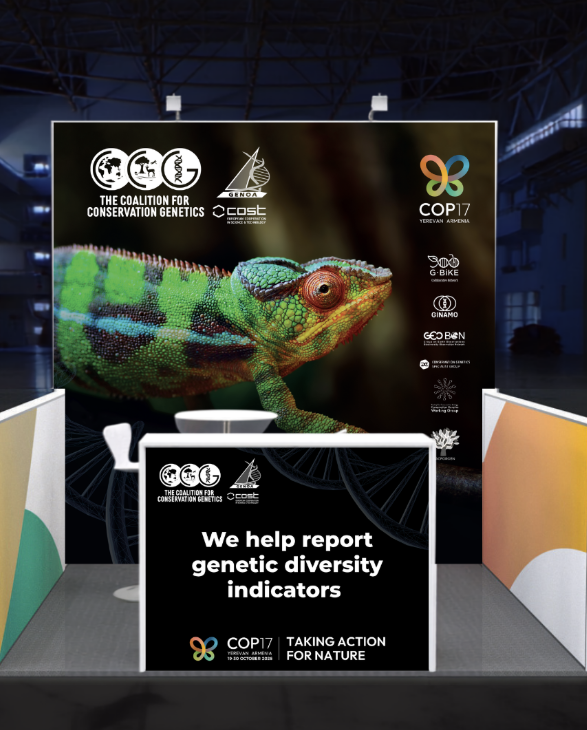
Experts in conserving and restoring genetic diversity and adaptive potential are attending COP17!
Look for the chameleon! You can find us at The Coalition for Conservation Genetics Exhibition Booth in the Blue Zone.
We will be present at a shared exhibition booth to showcase how conservation genetics can support the implementation of the KMGBF, with a particular focus on genetic diversity indicators and their application in national biodiversity monitoring and reporting.
We will also be a part of the following events:
Side events in the Blue Zone
Stay tuned - side events will be announced soon
Pavilions
To be announced soon
Major parallel meetings
André Rosado will be attending the Biosafety Clearing House and Risk Assessment workshop on 17-18 October.
David and Eric Bishop von Wettberg will be at the Regions4 metric session on 22 October, from 16:30 to 18:00 and at the networking reception in the Blue Zone on 25 October, from 18:00 to 20:00
Additional events will be announced soon
Meet the team
The CCG delegation includes experts from various networks, partners and projects working on scientific and policy aspects related to genetic diversity and KMGBF Target 4.





Achievable and Affordable Indicators
Measuring genetic diversity is feasible, achievable, and affordable. The genetic diversity indicators we have developed provide valuable insights for both conservation and sustainable development goals. Parties to the CBD are now required to report progress using the following indicators:
1. Proportion of populations within species with an effective population (Ne) size > 500 (Headline indicator A.4.0).
This threshold is vital for preventing losses of genetic diversity within populations, allowing populations to adapt to new conditions, climate change, and diseases.
2. Proportion of populations maintained within a species (additional complementary indicator).
This indicator is important as diversity among populations maintains evolutionary potential across a species' distribution.
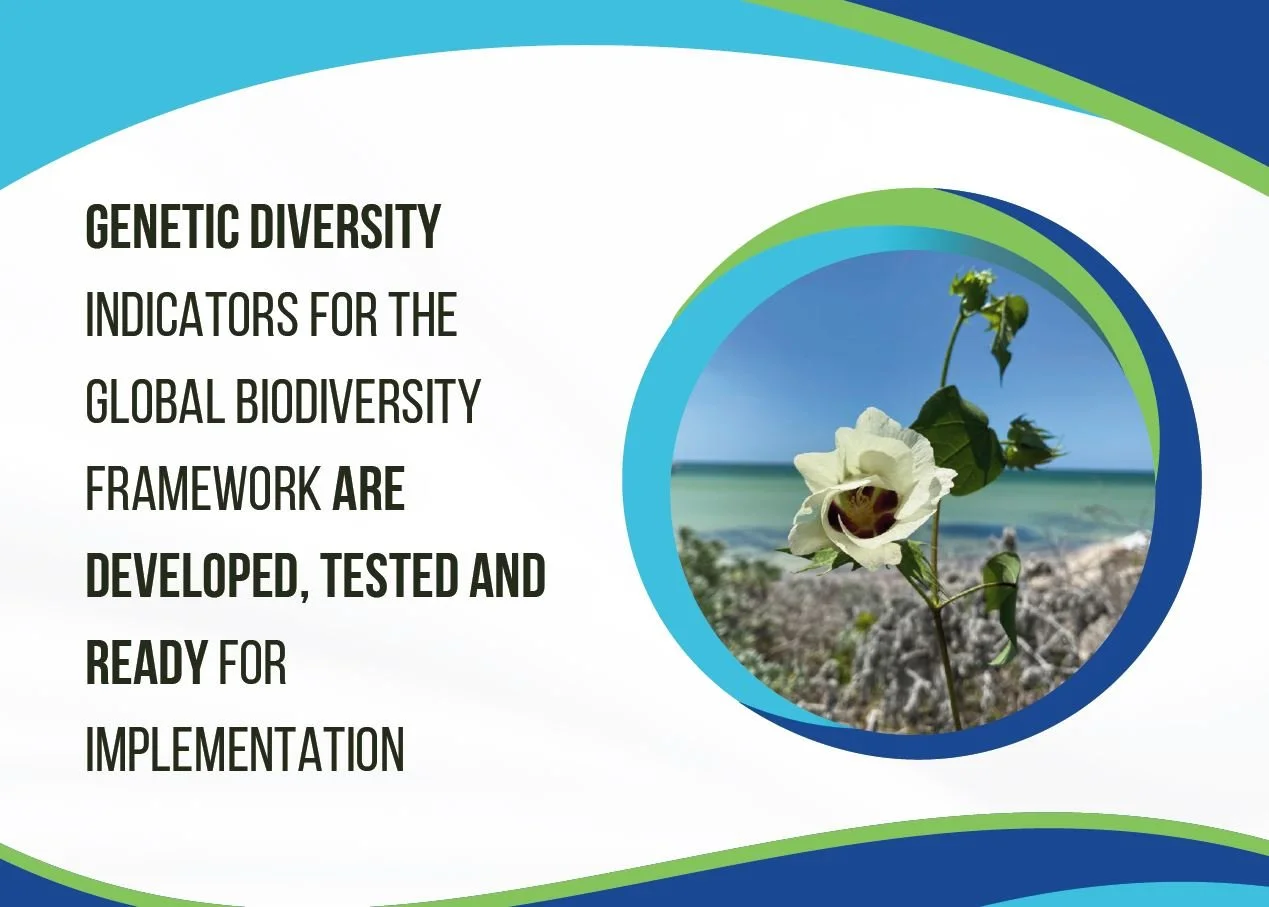
evaluating genetic diversity indicators in nine countries
In a recent paper in Ecology Letters, we assess the genetic diversity indicators for the Kunming-Montreal Global Biodiversity Monitoring Framework for 919 species, representing 5271 populations across nine countries, including megadiverse countries and developing economies. We show that the indicators are ready for implementation. Watch the short (5-minute) video and follow the link below to learn more.
Tools Available Now
The tools for calculating these genetic diversity indicators are already available and continually improving. This includes a meta-data form for indicator A.4, guideline materials and documentation and integration with resources like BON in a Box, a platform designed to enhance biodiversity observation systems globally.

Flexibility in Implementation
There’s no one-size-fits-all approach. While we’ve developed tools and support with our member organizations and through initiatives like GENOA and GINAMO, countries are free to adopt their own methods and do not have to follow the exact same pathway we used.
Our teams are committed to fostering collaboration between scientists and practitioners. We provide opportunities for networking and capacity building to ensure the successful implementation of genetic diversity indicators.
We encourage delegates to share their concerns, questions, or issues regarding the genetic diversity indicators and tools like Kobo and BON in a Box. Your feedback will help us improve these tools and make them more useful in practice.

Need Advice on NBSAP Development?
We can provide advice and resources to support countries in developing their National Biodiversity Strategies and Action Plans (NBSAPs), ensuring genetic diversity is well-represented.
Recommended reading and other resources